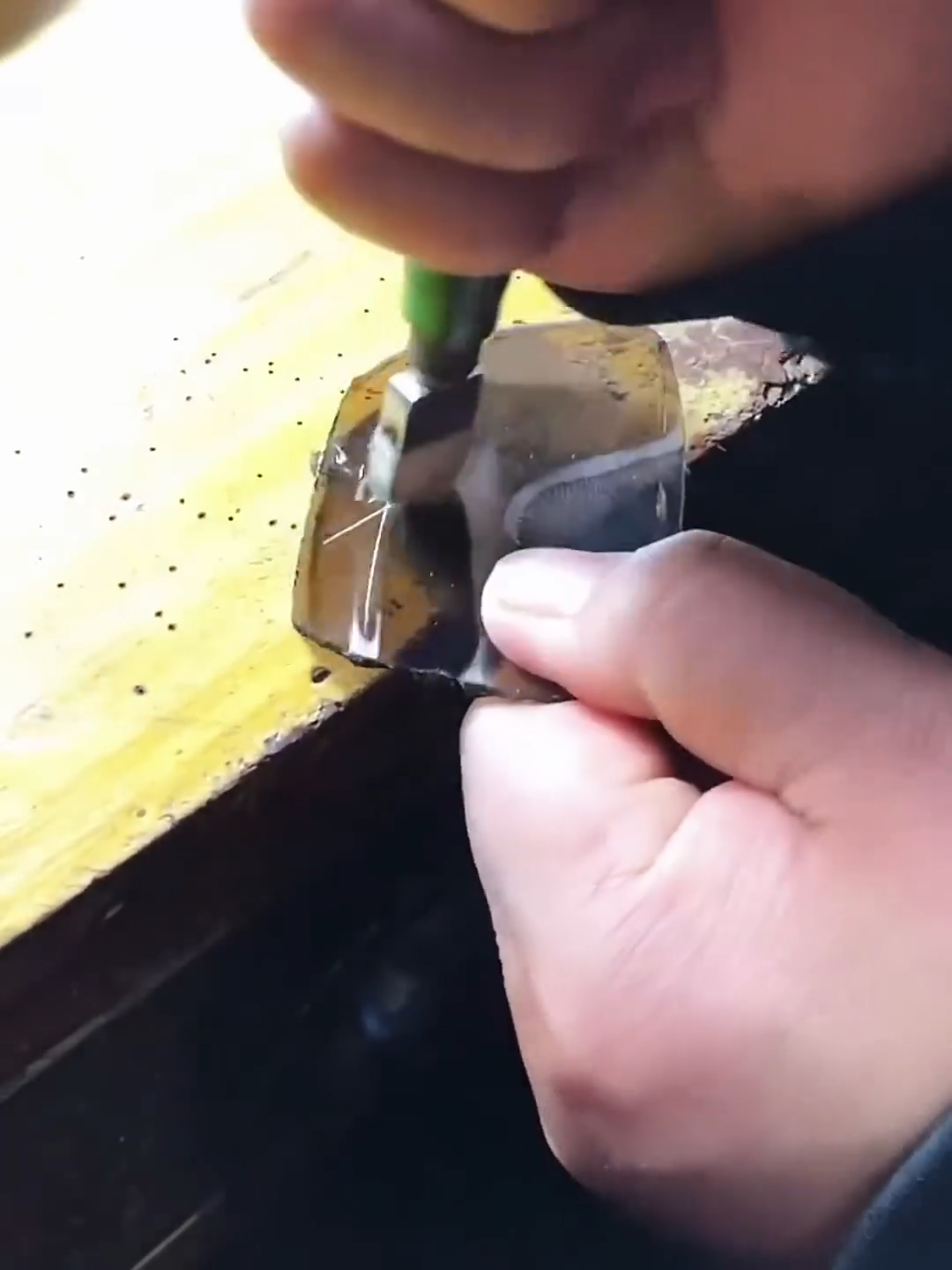
Natural crystal lenses are crafted from high-quality transparent quartz or other optical-grade natural crystals. These lenses are valued for their exceptional clarity, scratch resistance, and unique natural appearance. Producing a precision lens requires careful material selection, accurate machining, and multiple polishing stages to achieve excellent optical performance. The following step-by-step process outlines how a natural crystal lens is manufactured.
Step 1: Select the Natural Crystal
The process begins by choosing a high-quality natural crystal with excellent transparency and minimal internal inclusions. Each crystal is inspected under bright light to identify cracks, bubbles, or impurities that could affect optical quality. Only flawless sections are selected for lens production.
Step 2: Cut the Crystal Blank
Using a precision diamond saw, cut the selected crystal into a rough blank slightly larger than the finished lens dimensions. The cutting direction is carefully planned to minimize material waste and reduce internal stress. After cutting, inspect the blank again for hidden defects.
Step 3: Shape the Lens Blank
Mount the crystal blank onto a holding fixture and begin shaping it with diamond grinding wheels. Form the basic circular profile and establish the approximate lens thickness. Continuous water cooling is used throughout the grinding process to prevent overheating and reduce the risk of cracking.
Step 4: Generate the Lens Curves
Shape the front and back surfaces according to the required optical design. Precision grinding machines gradually create the desired convex, concave, or plano surfaces. Measurements are checked frequently using optical gauges to ensure the lens curvature matches the specified design.
Step 5: Fine Grinding
Replace coarse grinding wheels with progressively finer abrasives to remove machining marks. Continue refining both optical surfaces until they become smooth and accurately shaped. This stage prepares the lens for polishing while maintaining precise thickness and curvature.
Step 6: Polish the Optical Surfaces
Polish the lens using specialized polishing pads and fine polishing compounds. The polishing process removes microscopic scratches left by grinding and produces a transparent, mirror-like surface. Skilled technicians monitor the process carefully to preserve the lens geometry while achieving excellent optical clarity.
Step 7: Edge Finishing
Shape and smooth the outer edge of the lens using fine diamond tools. Chamfer the edges slightly to reduce the risk of chipping during handling and installation. The finished edge also allows the lens to fit securely into its intended frame or optical housing.
Step 8: Clean and Inspect
Wash the polished lens thoroughly using purified water and non-abrasive cleaning solutions to remove polishing residue. Dry the lens with lint-free materials and inspect it under bright illumination. Examine the optical surfaces for scratches, distortion, remaining inclusions, or polishing defects. Any lens that fails inspection is reworked or rejected.
Step 9: Apply Optional Protective Treatments
Depending on the intended application, the crystal lens may receive optional protective coatings such as anti-reflective, anti-smudge, or ultraviolet-resistant layers. These coatings improve light transmission, reduce reflections, and enhance durability without affecting the natural beauty of the crystal. Each coating is applied under carefully controlled conditions to ensure uniform coverage and long-term performance.
Step 10: Final Quality Control and Packaging
Perform a comprehensive inspection of the completed lens by verifying its dimensions, surface quality, optical clarity, and overall finish. Measure thickness, diameter, and curvature using precision instruments to confirm compliance with design specifications. After passing all quality checks, clean the lens one final time and package it in a protective dust-free container with soft cushioning to prevent scratches during transport. Proper storage in a dry, clean environment helps preserve the lens until installation. With careful craftsmanship, precision polishing, and rigorous quality control, a natural crystal lens provides exceptional optical performance, remarkable durability, and timeless elegance for use in specialty optical instruments, decorative items, scientific equipment, and luxury handcrafted products.