There is something satisfying about watching a rough piece of wood become perfectly smooth. The polishing process of round wooden boards is one of the most important finishing stages in woodworking, turning an ordinary wooden disc into a beautiful product ready for furniture, home décor, serving trays, tabletops, clocks, and countless DIY projects. Although polishing may seem simple, it requires skill, patience, and attention to detail to achieve a flawless finish.
Professional woodworkers understand that polishing is much more than making wood shiny. It removes imperfections, highlights the natural grain, prepares the surface for protective coatings, and significantly improves the durability of the finished product. Whether the board is made from oak, walnut, maple, pine, teak, or another hardwood, proper polishing enhances its natural beauty while extending its lifespan.
Starting with the Right Wooden Board
Every quality project begins with selecting the right piece of wood. Round wooden boards can be cut from solid hardwood or manufactured by laminating several pieces together. Before polishing begins, the wood must be completely dry to prevent future warping or cracking.
The board is carefully inspected for knots, dents, scratches, glue residue, or uneven edges. Small defects are repaired before sanding starts, ensuring the finished surface will be smooth and consistent.
Preparing the Surface
Preparation is one of the most important steps in the entire process.
Dust, dirt, and loose fibers are removed using brushes or compressed air. If the board has been recently cut, the edges may still contain rough saw marks that require shaping before polishing.
Woodworkers often round over the edges slightly using a router or sanding block to create a softer, more comfortable finish while reducing the risk of splinters.
A properly prepared board makes every polishing step more effective.
The First Sanding Stage
Polishing begins with coarse sandpaper designed to remove major imperfections.
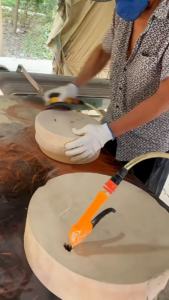
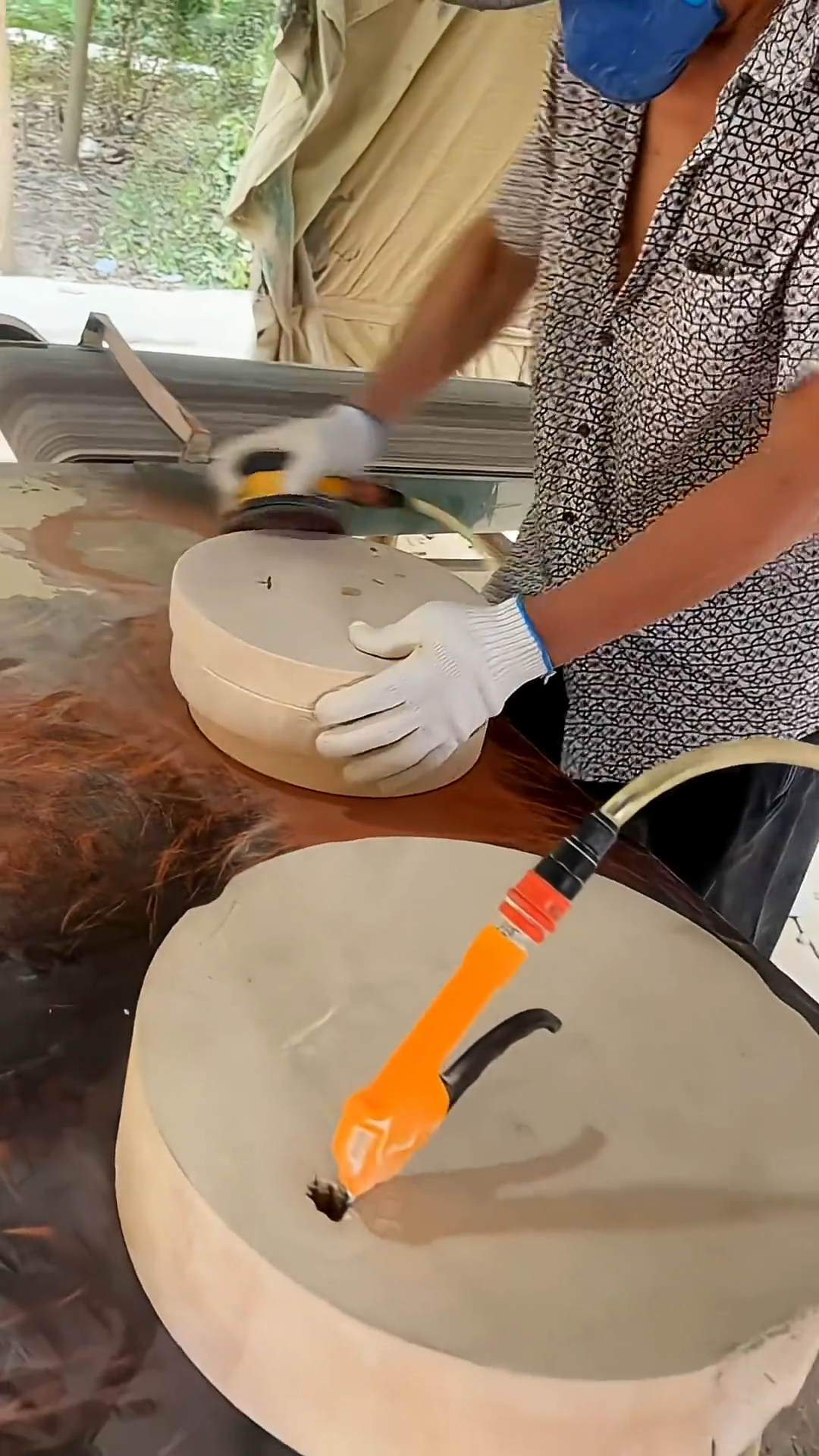
Using either a random orbital sander or a disc sander, the operator moves evenly across the entire surface without applying excessive pressure. This first stage removes machining marks, rough fibers, and uneven areas left from cutting.
The goal is not to create a perfectly smooth surface immediately but to establish a flat and even foundation for the finer sanding stages that follow.
Refining the Surface
After the coarse sanding is complete, progressively finer sandpaper is used.
Each sanding stage removes the tiny scratches created by the previous grit. The wood gradually becomes smoother as the abrasive particles become finer.
Experienced craftsmen never skip sanding grits because doing so often leaves visible scratch marks that become even more noticeable after finishing.
The process requires patience, but the results are worth the effort.
Special Attention to the Edges
Round wooden boards feature curved edges that require extra care.
Unlike flat surfaces, curved edges are more difficult to sand evenly. Flexible sanding pads or hand sanding techniques help maintain a consistent shape without flattening the rounded profile.
Smooth edges improve both appearance and comfort, especially for products designed to be handled regularly.
Removing Dust Between Steps
One of the secrets to achieving a professional finish is keeping the surface clean.
After every sanding stage, wood dust is carefully removed using compressed air, microfiber cloths, or tack cloths. Any remaining dust can become trapped during the next sanding stage or under the finish, reducing the quality of the final result.
A clean workspace also improves visibility, allowing the woodworker to spot imperfections more easily.
Revealing the Natural Wood Grain
As the sanding progresses, the wood begins to reveal its natural beauty.
Every species has its own unique grain pattern, color variation, and texture. Fine polishing enhances these characteristics, making the finished board look richer and more attractive.
Some hardwoods display dramatic grain patterns, while others offer a smooth and elegant appearance. Proper polishing allows these natural features to stand out without hiding them beneath excessive finishing materials.
Hand Sanding for Perfection
Although machines perform most of the heavy work, many professional woodworkers finish with careful hand sanding.
Hand sanding removes tiny swirl marks left by power tools and gives the surface a consistent texture across the entire board.
This final touch often separates professional craftsmanship from ordinary woodworking.
Inspecting the Surface
Before any finish is applied, the board undergoes a careful inspection.
The surface is viewed under bright lighting from different angles to identify scratches, dents, uneven areas, or sanding marks that may have been overlooked.
Any imperfections are corrected immediately before moving to the finishing stage.
Taking time for inspection prevents costly mistakes later.
Applying the Finish
Once polishing is complete, the wooden board is ready for finishing.
Depending on the intended use, craftsmen may apply natural oils, hard wax oils, polyurethane, lacquer, shellac, or food-safe mineral oil.
Each finish offers different benefits. Oils enhance the wood’s natural appearance, while polyurethane provides excellent protection against moisture and wear. Food-safe finishes are commonly used for cutting boards, serving trays, and kitchen accessories.
The finish is applied evenly using brushes, cloths, or spray equipment, allowing the wood grain to remain the star of the finished piece.
Drying and Additional Coats
After the first coat dries completely, the surface is often lightly polished again using ultra-fine abrasive pads.
This removes any raised wood fibers and prepares the board for additional protective coats.
Multiple thin coats usually produce a stronger and more attractive finish than one thick application.
Each layer adds durability while maintaining the smooth texture created during polishing.
Final Buffing
The last stage of the polishing process is buffing.
Using a soft polishing pad or cloth, the finished board is gently buffed until it develops a rich, even sheen.
Depending on the desired appearance, the finish may range from a natural matte look to a glossy surface that beautifully reflects light.
Buffing also removes fingerprints and creates a luxurious feel that customers immediately notice.
Quality Control
Professional workshops perform a final quality inspection before packaging.
Every board is checked for consistent color, smoothness, edge quality, finish coverage, and overall craftsmanship.
Only products meeting high standards move forward for delivery or sale.
Quality control ensures customers receive wooden boards that are both beautiful and durable.
Common Mistakes During Polishing
Several mistakes can affect the final result.
Skipping sanding grits often leaves visible scratches.
Applying too much pressure may create uneven surfaces.
Failing to remove dust can trap particles beneath the finish.
Applying thick finish coats may cause runs or extended drying times.
Working too quickly often reduces overall quality.
Professional woodworkers avoid these problems through careful attention to every stage of the process.
Why Proper Polishing Matters
A well-polished wooden board offers more than an attractive appearance.
Smooth surfaces resist dirt buildup, are easier to clean, accept finishes more evenly, and provide greater resistance to moisture and daily wear.
For decorative products, polishing highlights the natural character of the wood. For functional products, it improves comfort, durability, and long-term performance.
Whether used as a tabletop, serving tray, cutting board, clock base, or decorative display piece, proper polishing greatly increases the value of the finished product.
Final Thoughts
The polishing process of round wooden boards is where craftsmanship truly comes to life. Through careful sanding, detailed surface preparation, dust removal, finishing, and final buffing, an ordinary piece of timber is transformed into a smooth, elegant, and long-lasting product.
Every polished board reflects the skill and patience of the craftsman behind it. While machines make the work faster, achieving a truly professional finish still depends on experience, attention to detail, and a commitment to quality. The result is a wooden board that not only looks beautiful but is ready to serve its purpose for many years, showcasing the timeless appeal of natural wood and expert workmanship.