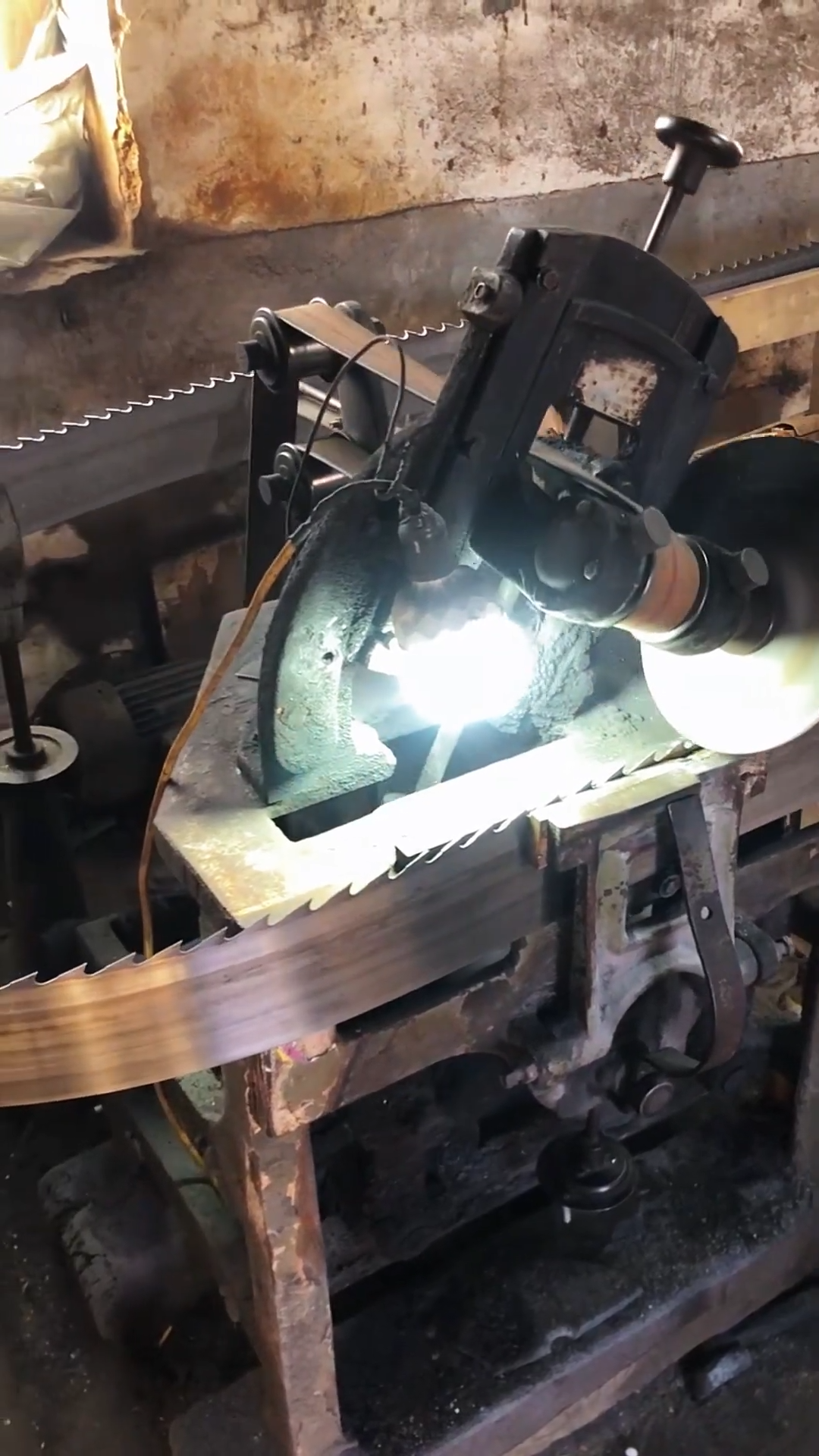
An old saw sharpening machine can restore worn cutting teeth and extend the useful life of saw blades. Traditional sharpening machines typically use a grinding wheel, adjustable guides, and a mechanical feed system to reshape each tooth. Careful inspection and accurate adjustment are essential because excessive grinding can change the tooth geometry or damage the blade.
Step 1: Inspect the Saw Blade
Begin by examining the old saw blade carefully. Look for broken teeth, excessive wear, cracks, corrosion, bent sections, or other damage. A blade with serious structural damage should not simply be sharpened; it may require professional repair or replacement. Clean away accumulated resin, dust, and debris before inspection.
Step 2: Clean and Prepare the Machine
Inspect the sharpening machine before use. Check the grinding wheel, guards, drive components, blade holder, adjustment mechanisms, and electrical connections. Remove accumulated grinding dust from the machine and make sure all protective covers are securely installed. Replace damaged or excessively worn components before operation.
Step 3: Select the Correct Grinding Wheel
Choose a grinding wheel suitable for the blade material and tooth geometry. The wheel must be correctly rated for the machine and securely mounted. Inspect the wheel for cracks or damage before installation. Never use a damaged grinding wheel or operate it without the required guard.
Step 4: Mount the Saw Blade
Secure the saw blade in the machine’s holding mechanism. Position it so the teeth are correctly aligned with the grinding wheel. The blade should remain firmly supported while still allowing the machine’s indexing system to move from one tooth to the next.
Step 5: Set the Tooth Geometry
Adjust the machine according to the saw manufacturer’s specifications. Set the grinding angle, tooth height, tooth spacing, and grinding depth as required. Use a sample tooth or reference measurement to confirm the settings before sharpening the entire blade.
Step 6: Position the Grinding Wheel
Move the grinding wheel into the correct position relative to the tooth being sharpened. It should contact the intended cutting surface without removing unnecessary material from the tooth body. Make a light test grind and inspect the result before continuing with the full sharpening cycle.
Step 7: Sharpen the Teeth
Start the machine according to its operating instructions and allow the grinding wheel to reach its normal operating condition. Feed or index the blade gradually so each tooth receives a consistent grinding pass. Avoid excessive pressure or deep grinding, as overheating can damage the cutting edge or alter the steel’s properties.
Step 8: Index the Blade
After sharpening one tooth, move the blade to the next tooth using the machine’s indexing mechanism. Continue the process around the entire blade. Maintain consistent tooth geometry throughout the cycle. For alternating tooth patterns, verify that the machine is correctly adjusted for the required left- and right-hand tooth angles.
Step 9: Inspect the Sharpened Blade
After completing the sharpening cycle, remove the blade only after the machine has stopped completely. Inspect each tooth for consistent height, shape, and sharpness. Look for overheating discoloration, uneven grinding, cracks, or damaged teeth. Compare the finished teeth with the original specifications or a suitable reference.
Step 10: Test and Maintain the Equipment
Install the sharpened blade only in equipment designed for that blade and perform an appropriate controlled test. Observe the cutting action for excessive vibration, noise, or poor performance. After sharpening, clean the machine and remove grinding residue using the manufacturer’s recommended procedure. Inspect the grinding wheel regularly and maintain the machine’s guides, bearings, clamps, and adjustment mechanisms. Keep accurate records of sharpening settings for repeated jobs. A properly maintained old sharpening machine can continue producing accurate results for many years. However, because rotating grinding wheels and saw blades can cause serious injuries, operation should be performed only by trained users who follow the machine manufacturer’s instructions, guarding requirements, and appropriate workshop safety procedures. Proper setup, controlled grinding, and regular inspection help restore cutting performance while preserving the service life of both the blade and sharpening equipment.