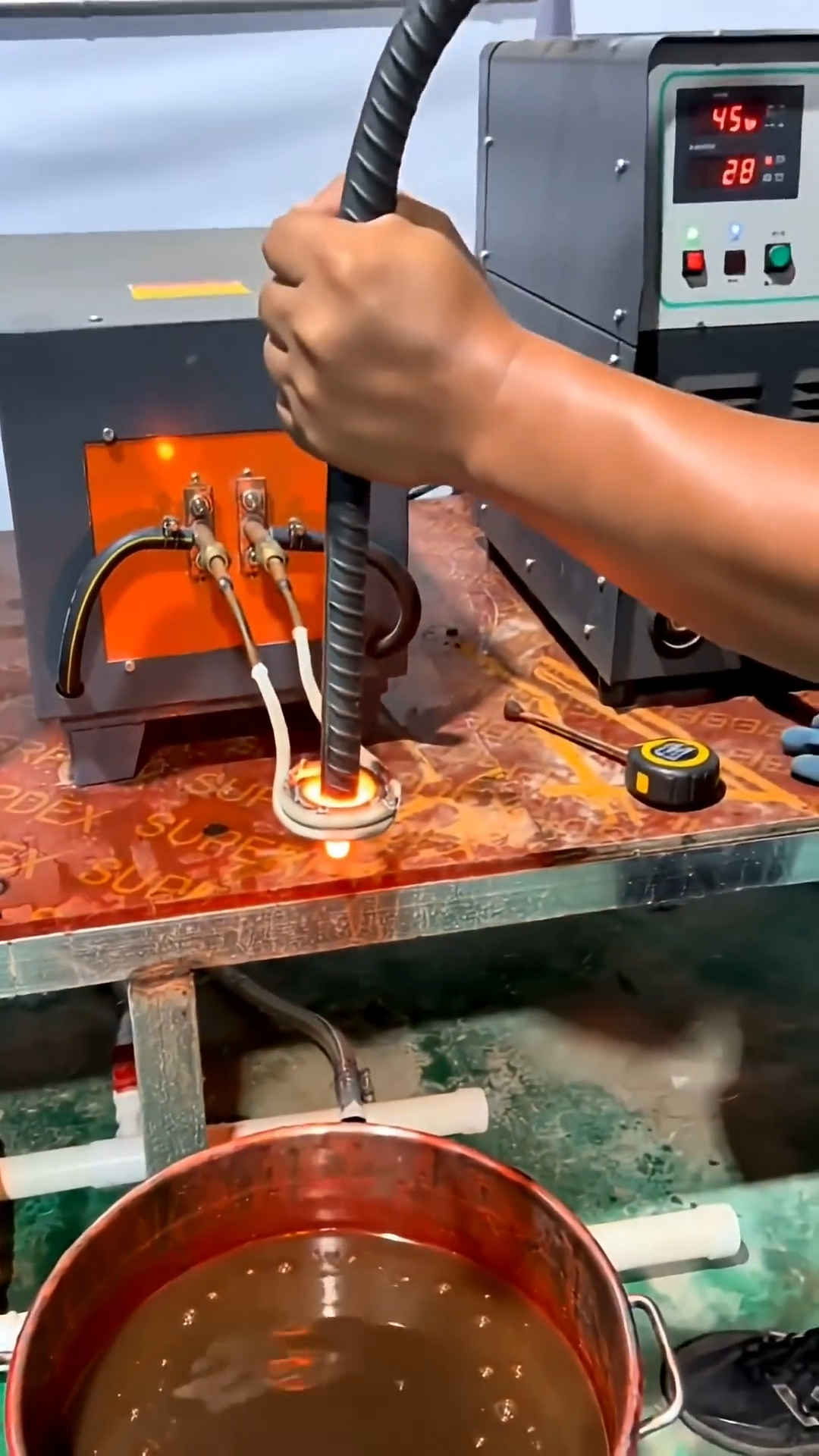
Heating and melting reinforcing bars is a specialized metalworking process that involves exposing steel reinforcement to extremely high temperatures. In practice, reinforcing bars are more commonly heated for cutting, bending, straightening, forging, or recycling rather than fully melted. When recycling steel, controlled melting is normally performed in an industrial furnace designed for scrap metal processing. The following overview describes the general industrial process.
Step 1: Inspect and Sort the Reinforcing Bars
Begin by collecting the reinforcing bars and inspecting them for excessive corrosion, concrete residue, coatings, or other contaminants. Sort the steel according to its grade, diameter, and composition. Separating different materials helps maintain consistent chemical properties during recycling or remelting.
Step 2: Clean the Steel
Remove concrete, dirt, oil, paint, and other unwanted materials from the reinforcing bars. Mechanical cleaning methods such as chipping, brushing, or abrasive equipment may be used in industrial facilities. Clean steel reduces contamination and improves the quality of the final recycled material.
Step 3: Cut the Reinforcing Bars
Long reinforcing bars are cut into manageable sections using industrial cutting equipment. The pieces should be sized according to the furnace charging system. Proper sizing allows the material to be loaded efficiently while reducing empty spaces inside the furnace.
Step 4: Prepare the Furnace
Industrial steel recycling facilities use specialized furnaces such as electric arc furnaces or induction furnaces. Before charging the furnace, operators inspect the refractory lining, electrical systems, cooling equipment, extraction system, and safety controls. The furnace must be operated only by trained personnel following the manufacturer’s procedures and applicable industrial safety requirements.
Step 5: Load the Steel
The prepared reinforcing steel is transferred into the furnace using suitable mechanical handling equipment. Operators distribute the material carefully to maintain stable furnace operation. The charging system is designed to keep personnel away from the high-temperature furnace opening and molten-metal area.
Step 6: Heat the Steel
The furnace supplies sufficient energy to raise the steel temperature until the reinforcing bars begin to soften and eventually become molten. During this stage, operators monitor temperature, electrical power, furnace conditions, and the condition of the metal. Industrial control systems help maintain consistent melting conditions.
Step 7: Remove Impurities
As the steel melts, unwanted materials and oxides may rise toward the surface as slag. Industrial operators remove slag using specialized equipment while maintaining safe separation from the molten metal. Chemical composition may also be analyzed so alloying additions can be made when required to achieve the target steel specification.
Step 8: Control the Molten Steel
The molten steel is held at a controlled temperature before casting. Samples may be taken for laboratory analysis to verify chemical composition and quality. Operators monitor the furnace carefully to maintain the required temperature and prevent excessive oxidation or contamination.
Step 9: Cast the Recycled Steel
Once the molten steel meets the required specifications, it is transferred into prepared molds or a continuous casting system. The liquid metal gradually solidifies into billets or other semi-finished forms. These products can later be reheated and processed into new steel products, including reinforcing bars.
Step 10: Inspect and Process the Finished Material
After cooling, the cast steel is inspected for surface defects, dimensions, and material quality. Semi-finished billets can be reheated and passed through rolling mills to produce new reinforcing bars with the required diameter and mechanical properties. Final testing may include dimensional checks and mechanical or chemical analysis. Proper recycling of reinforcing steel reduces material waste and conserves raw resources. Because molten steel involves extreme temperatures, intense radiation, heavy equipment, and hazardous fumes, melting operations should be performed only in properly equipped industrial facilities by qualified personnel using appropriate protective systems, ventilation, monitoring equipment, and established safety procedures.